Showing posts with label 1987. Show all posts

Thursday, October 17, 2013

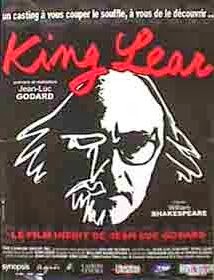
King Lear (Jean-Luc Godard, 1987)

My Godard posts have all been first impressions, for better and worse (especially worse during my early attempts to grapple with him), but I had to watch King Lear three times before I felt comfortable writing about it in any capacity. Possibly Godard's densest work, at least to that point, it is also my favorite of his, an enervating, funny, autocritical and far-reaching work that castigates the artist for his pretentious ambition even as it defends his self-annihilating desire to make cinema all he thinks it can be. Crying out for a proper home video release; maybe Olive Films, who have presented some crucial later Godards already, will pick up the slack.

Read my full review at Spectrum Culture.

Tuesday, October 15, 2013

Prince of Darkness (John Carpenter, 1987)

My initial review of Prince of Darkness was mostly negative, but it is the Carpenter film I have returned to most often, and the one that has gradually emerged as my favorite of his. I was glad to get the chance to re-evaluate it, and though this is a belated link, it fits nicely within October viewing. I highly recommend the film, and its new Blu-Ray, which I also reviewed and will link to shortly.

Read my post at Spectrum Culture.

Thursday, November 29, 2012

Ishtar (Elaine May, 1987)

With Heaven's Gate currently in the grips of revisionist appraisal (to which I may soon add my own voice once my disc ships with some pre-orders next month), I thought I might use my latest Criminally Underrated piece for Spectrum Culture to address the Heaven's Gate of comedy, Elaine May's Ishtar. I have seen three of May's four features, and all of them show off such an immense comic talent that her marginalization and retirement from directing trigger a retrospective outrage. Ishtar is not as focused as either The Heartbreak Kid or Mikey and Nicky, yet its propulsion outward of all the lacerating, insular insights of those films turns the personal and social into the geopolitical, and her broad parody of Hope/Crosby pictures emerges one of the great satires of the Reagan era. Idiotically self-absorbed man-children looking to hit big in another land do not look or behavior too differently from the CIA agents who mold those other lands to US interests, and the description I saw somewhere comparing this movie to the symphony of political inanity Burn After Reading feels especially apt.

My full review is up now at Spectrum Culture.

Tuesday, August 14, 2012

Sign 'O' the Times (Prince, 1987)

Like Purple Rain, the film of Sign 'O' the Times matches the album it supports. The former visualizes the artist in ascendancy, matching the jubilant, youthful bravado of songs like "Let's Go Crazy" and, of course, "Baby I'm a Star." Its narrative progression is basic but executed with sufficient weirdness to allow for idiosyncrasy and the odd bit of emotional resonance (the belabored journey of the title song within the film, to say nothing of the track itself). And like the album to which it is linked, Purple Rain is at once dated and outside time, a relic of outlandish '80s pop culture and a refinement of that culture into an enduring piece of art.

Sign 'O' the Times has almost nothing in common with Albert Magnoli's film, but then Sign 'O' the Times the album so scarcely resembles the music of Purple Rain. Like the double LP, Sign 'O' the Times begins with what appears to be a story, the theatrical staging of the movie analogous to the lyrical collection of headlines that is the album's opening title track. But then, as quickly as a story emerges, it dissipates, giving way to a pure rush of eclectic songwriting and performance that shows off the best pop star of his time at the top of his talent. From the overbearing stage design to the colliding moods of the 13 songs chosen for the final cut, Sign 'O' the Times matches the unwieldiness of Prince's cobbled-together album (these two haphazard vinyl discs themselves the result of whittling down three separate abortive projects, two of them multi-LP themselves, into one release). Yet it also matches the music's sense of unexpected cohesion and its uncontainable skill and force. There are better directed concert films, and ones that feel more definitive, but no other live document so immaculately captures the filth and fantasy of rock's id.
Monday, August 6, 2012

Where is the Friend's Home? (Abbas Kiarostami, 1987)

Where Is the Friend's Home? announces the intimacy of its focus from its opening shot, held on a door in close-up as the credits roll. The sound of children chattering and the unlatched door being blown ajar and closed again by the wind comprises all the action of the shot, until a shadow appears upon the door and footsteps near. The approaching person is the schoolteacher, reentering the classroom to scold his unruly wards. By focusing so intently on, effectively, nothing, Abbas Kiarostami makes the teacher's emergence that much more frightening, subtly aligning the audience's feelings toward the man with those of the children he harangues. One poor boy in particular, Mohammed Reza Nematzadeh, receives such a tongue-lashing for doing his homework on loose-leaf rather than in his assigned notebook that his thunderstruck terror filters through the camera and nearly turns the calmly filmed scene into a horror film.

Kiarostami stays in a childlike perspective for the remainder of the movie. Adults never appear in full close-up, the way a kid processes a grown-up, and the even larger world around them can be as scary as it is wondrous and inviting. The world takes on these contradictory properties to an even greater extent for Ahmad, a classmate of Nematzadeh's who discovers he accidentally took his friend's notebook home with him. Aware that his hapless buddy faces expulsion if he enters class the next day without that book, Ahmad decides to return it. But with Nematzadeh in the town of Poshteh and Ahmad stuck in Koker, he needs some help getting there, help almost always denied him.