An act of American obliviousness sets in motion the events of Munich. At the 1972 Olympics, a group of American athletes stumble across some Palestinian men attempting to get past a gate. Used to the sight of small bands of men from different countries roaming the area, the Americans jovially call out to them and ask what event they're in. Blind to the tense, apprehensive faces of the men, the athletes show them in and depart on friendly terms. But before the Americans are even out of range, the group is already pulling out new clothes and weapons to storm the hotel room holding the Israeli Olympic team. They do, and everything else plays out on the actual newscasts recorded over the next 18 hours. It ends, of course, with Jim McKay's infamous declaration, "They're all gone."
But despite the film's title, Munich does not end with the conclusion of its heinous massacre; it's only just begun. In fact, Munich may not even be about the aftermath of the killings in the titular city. Released in proximity with the 9/11-conjuring fever dream War of the Worlds, Munich serves as the more thoughtful, severe follow-up to the notion of a terrorist attack and society's response to it. Spielberg's reenactments of news crews frantically assembling outside the hotel, scrambling for any new updates as their presence only worsens the situation, is as indicative of Spielberg's true aims as the final shot showing the New York skyline with the World Trade Center still standing in the middle of the frame. Munich may be about a specific event and the fallout from it, but the director clearly wants us to apply the lessons the movie teaches to more current issues of terrorism and counterterrorism.
Personal blog of freelance critic Jake Cole, with exclusive content and links to writing around the Web.
Showing posts with label Ciarán Hinds. Show all posts
Monday, March 26, 2012
Tuesday, March 6, 2012
Ghost Rider: Spirit of Vengeance (Neveldine/Taylor, 2012)
After the gross incompetence of Marvel's first cinematic crack at one of its intriguing lesser-tier characters, I can't imagine anyone was altogether excited for a sequel to 2007's Ghost Rider. The fact that a sequel has come five years after the fact only compounds the general indifference that surely greeted this project. Nevertheless, Marvel outdid themselves in selecting Neveldine/Taylor to replace über-hack Mark Steven Johnson at the helm. The duo behind the frenzied, magnificently obscene Crank films could bring a refreshingly seedy and gonzo approach to this grindhouse-friendly comic book hero, and suddenly the hysterical miscasting of Nicolas Cage in the first movie became a boon. The thought of the craziest filmmakers in America working with the craziest actor in America seemed too good to be true.
Unfortunately, it is. If Marvel was willing to give this franchise another go, they clearly weren't going to invest much in it, and the result is a film that, in many ways, looks less professional and polished than the works Neveldine/Taylor did as underground filmmakers. Given barely any more money than they received for the excellent, criminally underrated Gamer and expected to make a more CGI-intensive film, Neveldine/Taylor must retreat to Romania to shoot, something they themselves mock with a location card vaguely reading "Eastern Europe."
Labels:
Ciarán Hinds,
Idris Elba,
Neveldine/Taylor,
Nicolas Cage
Sunday, December 4, 2011
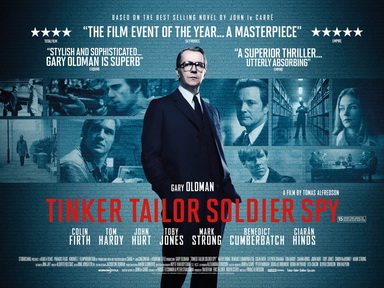
Tinker Tailor Soldier Spy (Tomas Alfredson, 2011)
Expanding upon the style that brought him international fame with 2008's Let the Right One In, Tomas Alfredson makes a chilly, claustrophobic character drama out of John Le Carré's classic spy thriller Tinker Tailor Soldier Spy. This is even more impressive considering that the film primarily takes place in vast sets colored in warm, oaken browns (albeit the kind Joyce used to signify death and ossification). Alfredson's vampire film similarly used its expansive white space to actually constrict the frame, and here he goes one step further, swapping out intense but myopic angst for loyalty fears with global consequences. Where youth merely think the whole world is against them, it truly could be if one of these spies slips up, hence why the members of the organization seem to spend more time monitoring each other than anything going on in Russia.
Subscribe to:
Posts (Atom)